About
“All of Your breakers and Your waves have surged over me.”
e are at sea. Never in our lifetimes has it been this difficult to live as a Jew in this deeply broken, tempestuous world. Our communities are fractured, our leaders and institutions held captive by their own self-fulfilling prophecies of fear—of ubiquitous, inevitable antisemitism; of assimilation; of irrelevance.
W
Amid the unrelenting currents of the open ocean, we ourselves struggle to hold on to a Torah that has been emptied of its timeless, buoyant wisdom and filled with the foreign, faithless languages of ideology and politics. We are told it does not belong to us, and we do not belong to it. How, then, are we to stay afloat?
“Deep calls unto deep at the sound of Your channels.”
Our mystical tradition teaches that the deep darknesses of this world mirror the depths of Torah, from which the brightest light emerges. It is specifically through deep engagement with the fullness of Torah—including those parts of Torah that challenge, even disturb us—that we are able to see through the darkening veils of our lived reality. In fact, says the Tikkunei Zohar, when we study Torah and give to one another, we create an environment of mutual care and beneficence in the higher realms, parallel to our own . This is the work that is upon us now.
“A great matter: the secrets of the Divine Chariot. A small matter: the debates (havayos) of Abaye and Rava.”
Havaya means Being. It is a traditional euphemism for the Tetragrammaton, the four letter name of God whose letters are said to be the elementary particles of everything that is. But in one place in the Talmud, it also refers to the intricate discussions of Torah between dear friends that become so intimately personal, so deeply relevant that they feels as though one’s entire existence depend on them. It is these shared moments—no less than those transcendent stitches in time one necessarily discovers alone—that form the substance of being-in-the-world, that allow the wheels of the chariot to turn.
“The studying is not the main thing; it is the doing.”
Many wonderful Jewish organizations already bring Jews together to study Torah, or to take on the world’s big questions. That alone is not what we are here to do. This moment calls for Torah that is wholly lived, whose aliveness and blessing is so apparent that those who study it cannot help but translate it into tangible, revealed good: justice, solidarity, creativity, flourishing. But it also calls for Torah that is just as rooted in the time-richness of our ancestors’ traditions as it is in the unfolding present. The Tree of Life is here in this world. We just have to carry it with us in a broken pot, on our quivering driftwood canoe, and nurture it until we reach the far shore of this raging sea. We may have to find new ways to float, to learn how to breathe deeply enough to swim underwater. But we will never let go.
-
Havaya grows organic, self-led micro-communities of Orthodox and Orthodox-adjacent Jews working towards restoration (tikkun) of social issues in their communities of origin and chosen communities. Fellowships, including Havaya’s seedling project Beis Midrash HaPenimi (The Inner Study Hall), offer a container for individual passion projects while providing leadership training and opportunities for cross-pollination with scholars, activists, and spiritual leaders in the Jewish community.
-
Havaya holds events centered by our rooting principles of empathic curiosity, respectful debate, and deep listening. We aim to shift discourses in Jewish communities by presenting challenging and innovative ideas in sophisticated, Jewishly literate language that respects the diversity of perception and experience among our Jewish siblings.
-
Havaya publishes scholarly, literary, and personal writing, as well as other creative work, by Jews who have had to soften or silence their voices because of communal pressures, or lack of a platform. We strive to publish work that represents the best, most whole versions of our selves, and seeks to move minds without blocking hearts.
-
Havaya brings Jews together when we need each other, when we need God, and when God needs us. Through prayer, song, and faith-driven action, we bring Torah to life—in the streets, online, and wherever we are called.
What we do
〰️
יהוה
יההו
יוהה
הוהי
הויה
ההוי
והיה
וההי
ויהה
היהו
היוה
ההיו
〰️ יהוה יההו יוהה הוהי הויה ההוי והיה וההי ויהה היהו היוה ההיו
What we’ve done
-
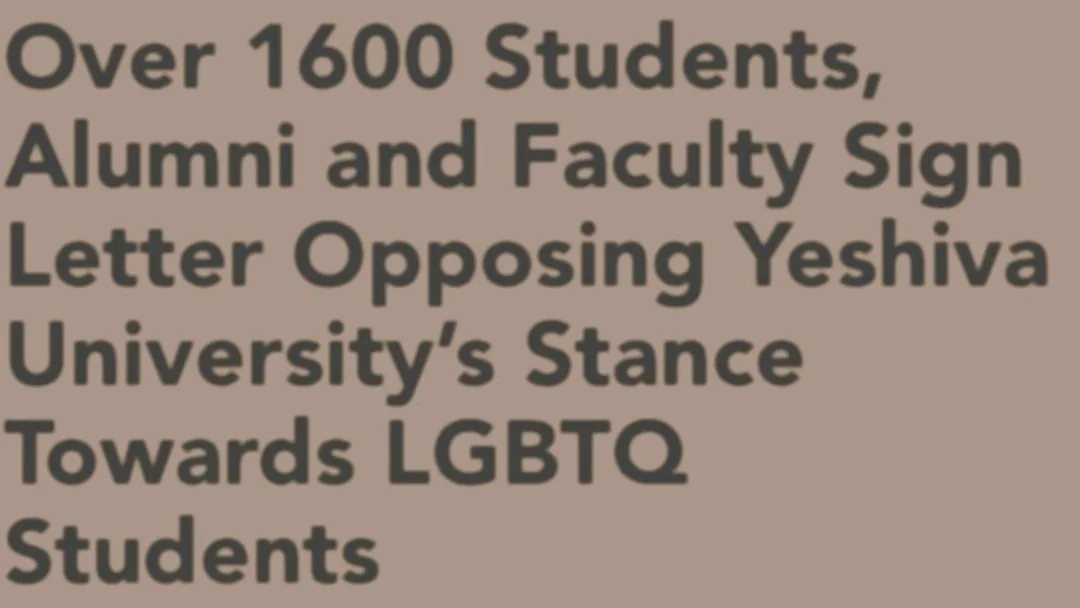
![Headline that reads "Over 1600 Students , Alumni, and Faculty Sign Letter Opposing Yeshiva University's Stance Towards LGBTQ Students]()
Wrote an open letter to Yeshiva University administration signed by more than 1,700 students, alumni, faculty, and staff urging the administration to approve the Yeshiva University Pride Alliance and foster a more welcoming environment for LGBTQIA+/queer students.
-
![]()
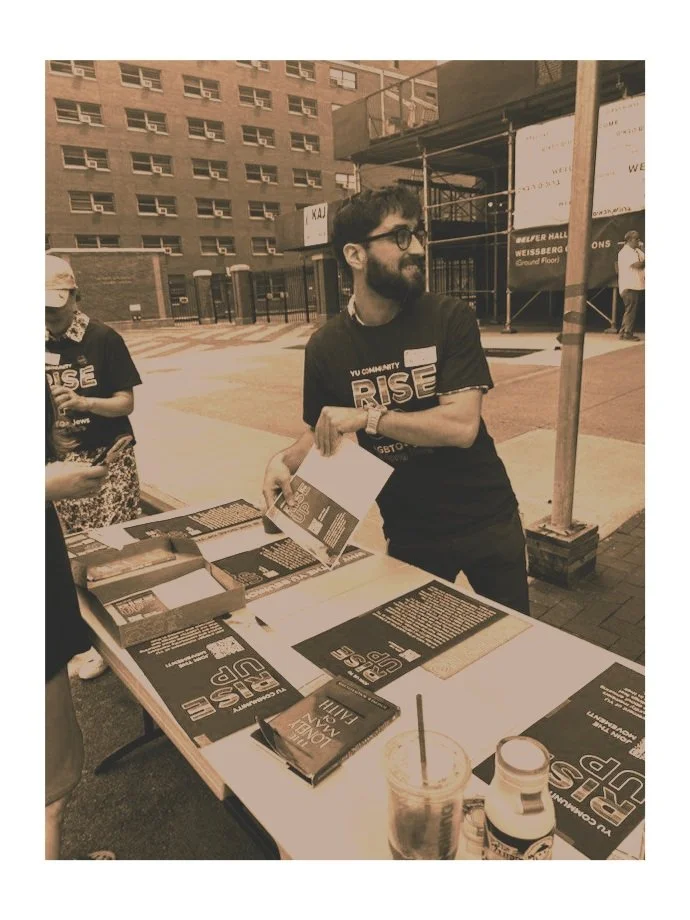
Planned a rally (as RiseUpYU) in a major public space in New York City in support of the YU Pride Alliance and Orthodox LGBTQIA+/queer people.
-
![]()
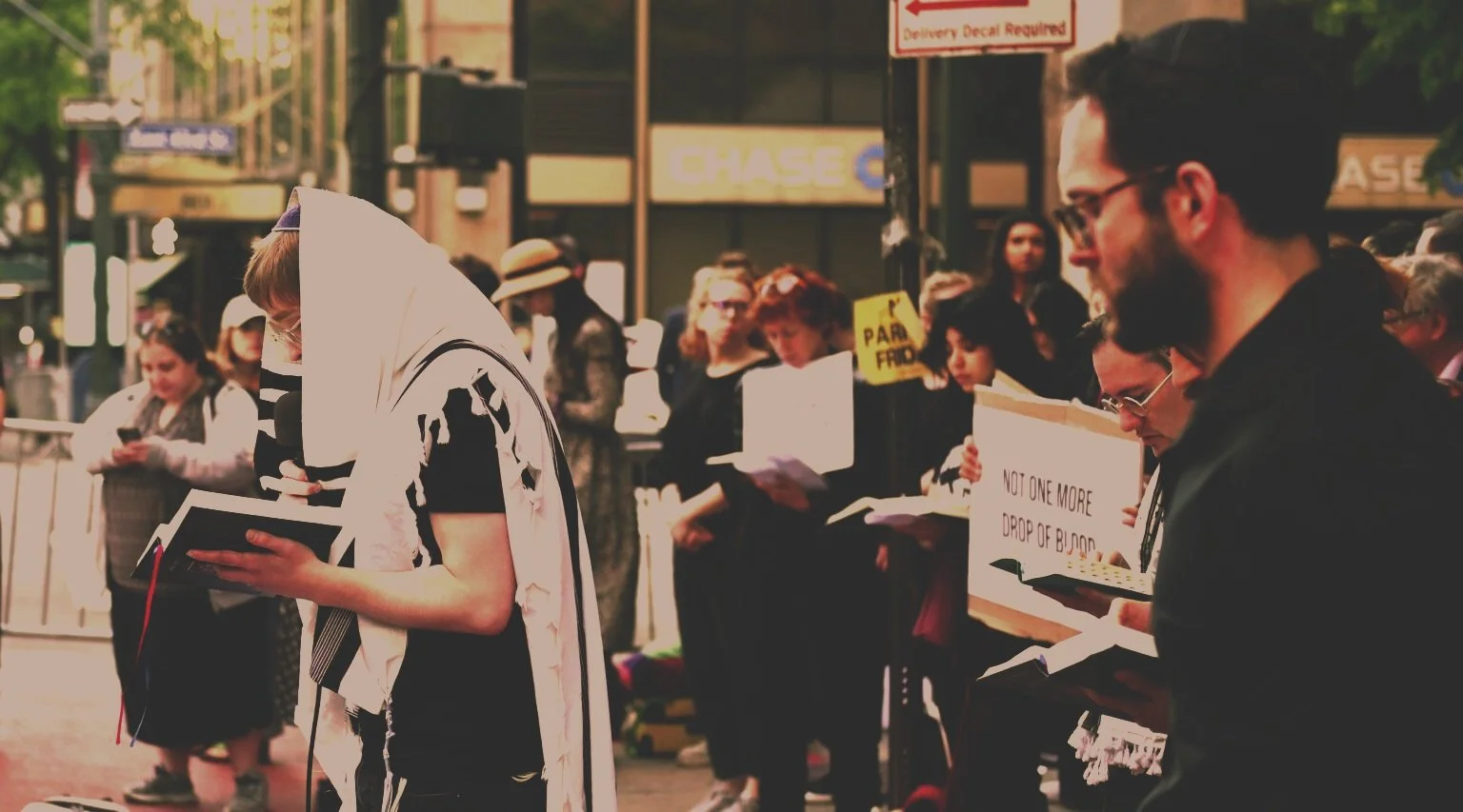
Organized an emergency atzeres tefilah (prayer gathering) and public fast day (Beha"b) in New York City for the safety and health of Israeli hostages and Palestinian civilians in Gaza and the West Bank, and for the end of the war and safe return of Israeli soldiers.


The Tikkunei Zohar (51b) likens the four letters of the Tetragrammaton to four voices in a musical composition. Each letter adds a dimension of depth, of complexity, that weaves together all of their voices into a song that allows each one to shine while remaining perfectly harmonious. In our mystical tradition, the four letters also correspond to the sefiros—the ten basic elements of Divine reality—the parts of the soul, and the four dimensions of spacetime. Our faith is rooted in these four sanctities, these four elementary particles of existence.
Sanctity of life
Yud - י ⦿ Keser (Desire)/Chochma (Wisdom) ⦿ Yechida/Chaya ⦿ Point/Line
Every human being was not only created b’tzelem Elokim, in the image of God, but also kidmuso (in God’s likeness)—as an inimitable artifact of Divine self-expression more similar to Godself than to any other person. Every human being’s individual experience is, therefore, not only deserving of respect, but is holy. We honor the individual experience of all people by celebrating difference—in background, in experience, in personal qualities, and in ways of seeing the world—in the same moment that we celebrate our shared humanity. We approach those whose actions we oppose, and those who oppose us, with love and a genuine desire to understand. We commit ourselves to protecting the earth and other living beings from all harm and work towards their flourishing out of an appreciation of the Divine that takes shelter within them.
Sanctity of relationship
Hey - ה ⌖ Binah (Particularity) ⌖ Neshama ⌖ Plane
The Torah—the blueprint of Creation in the Midrashic imagination—begins with the letter ב, the second letter in the aleph bet. Relationship—unity through duality—is the organizing principle of existence. Relation is the crucible that necessitates the specification and self-definition of the individual, and from which complexity emerges. We believe that our relationships—with one another, with our families and communities of origin, and with God—are the sacred ground in which the seeds of redemption sprout. We cherish them and show our deep reverence for them by using empathic language, practicing deep listening, and creating space for healthy disagreement. We honor and welcome others’ religious and spiritual traditions, including and especially those of our own people, even where they diverge from our own.
Sanctity of community
Vav - ו ⏣ Tiferes (Harmony) ⏣ Ruach ⏣ Space
Beauty is the coexistence of opposites, the recognition that at the heart of all polarization is an ever-elusive center where difference and sameness collapse into one another. The beauty of true community may be compared to a circle: it can only be realized when not a single individual and their unique contribution is missing, and when all are equally close to the center from where they stand. The communities we strive to grow are designed and sustained with this intention. We aim to nurture spaces of safety and comfort from the forces of darkness that rage outside, while building resilience together to weather the storm when others need us. We treasure every person and the singular gifts they offer the world, and work to ensure all feel equally welcome and wanted in our communities and beyond. We grow communities that are led collectively by all of their members, not just “leaders”.
Sanctity of time
Hey - ה ⏣ Malchus (Revelation) ⏣ Nefesh ⏣ Time
There are two paths the Messiah can take to the world’s final redemption: a longer, winding one through the dark forests and over the fallen timbers of history, pursued by hostage-takers, and a shorter one across the river, stepping on stones laid by those who eagerly and dutifully await the Messiah’s arrival. Only time—and our decision whether to live together with it, or to push it toward where we think it should go—will tell which path will be chosen. We seek to fill every fragment of the present moment with our awareness, until our perception of past, present, and future becomes one uninterrupted melody. We believe the continued thriving of Torah, of our tradition, is a testament to its Divinity. We believe it continues to be written on the parchment of our experience, that the unfolding present is its very revelation. And we believe we must know and love its past as deeply as we possibly can if we are to bear witness to its impossibly brilliant future.
Principles of faith



Beis Midrash HaPenimi ~ The Inner Study Hall
a cohort-based study and skill-building group for LGBTQIA+/Queer Orthodox Jews
-
The Beis Midrash HaPenimi is a fellowship-style cohort of queer/LGBTQIA+ Orthodox Jews learning from one another and from leading scholars, activists, and rabbis. Over the course of the year, chaverim (fellows) of the Beis Midrash will grapple with difficult texts, gain leadership and advocacy skills, and work on individual projects to be shared with the broader Orthodox community. The Beis Midrash HaPenimi is concurrently operating as a Queerkeit Incubator, and chaverim will participate in Queerkeit's national retreat in July 2025.
-
Panim means “inside”, but also, paradoxically, it means “face.” Our tradition teaches that this is because the face, when unhidden and unobstructed, is a window to the innermost parts of ourselves. LGBTQIA+/Queer Orthodox Jews know this well; because they are prevented from expressing their innermost selves (panim=inside) in most Orthodox spaces and communities, and their outward-facing selves (panim=face) are mischaracterized by Orthodox discourse, their inner gifts as individuals and Jews are hidden from the world against their will. The Beis Midrash seeks to address this by finding the religious language through which LGBTQIA+/Queer Orthodox Jews may understand their inner selves, and by working to identify and challenge the factors underlying their misrepresentation by others in Orthodox communities.
-
Recent events in the Orthodox community have highlighted the need for thoughtful, nuanced discourse led by LGBTQIA+ Jews on issues related to living as an LGBTQIA+ Jew in the Orthodox community. Policies on such essential questions such as inclusion in synagogues and other communal institutions have been established on both local and intercommunal levels with minimal or no input from LGBTQIA+ Jews. Often, these policies are adopted on the basis of inaccurate or wholly incorrect assumptions about LGBTQIA+ Jews’ identities, life choices, and ideological beliefs, rather than input from LGBTQIA+ Jews themselves. These assumptions further preclude transparent conversation and policymaking by serving as distractions from the essential issues at hand. The Beis Midrash will address these problems by 1) providing chaverim (fellows) with opportunities for in-depth study of these issues, 2) preparing them to become experts in their topic(s) of choice, and 3) providing opportunities to share their knowledge with the wider Jewish community.
-
The dual goal of the Beis Midrash is to elevate and center queer/LGBTQIA+ voices in Orthodox communal discourse while bringing them into dialogue with Orthodox rabbis and communal leaders to facilitate meaningful, lasting change in Orthodox communities authored by queer/LGBTQIA+ Orthodox people themselves.
-
Chaverim (fellows)will participate in biweekly sessions dedicated to a particular topic or text led by a staff facilitator, fellow participant, or guest presenter. Chaverim will also commit to a yearlong capstone project in their chosen area of interest with the goal of creating a concrete work product such as a research article, a policy paper, or communal education materials. The program will culminate with a conference open to the broader Jewish community at which chaverim will present their final projects. Following the conference, the program coordinators will arrange and facilitate a series of meetings between chaverim and rabbinic and communal leaders, as part of Eshel’s DuSiah dialogue program. Chaverim will receive a $500 stipend upon completion of the requirements of the Beis Midrash program.
-
Pending the outcome of our pilot year and securing additional funding, the Beis Midrash will accept a second cohort. Applications will be available in the fall of 2025.